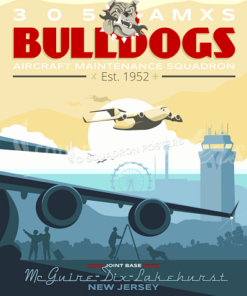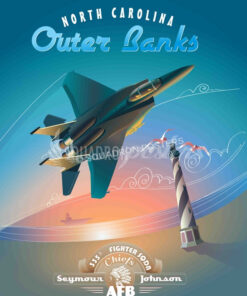





NAS Corpus Christi Coastal Bend
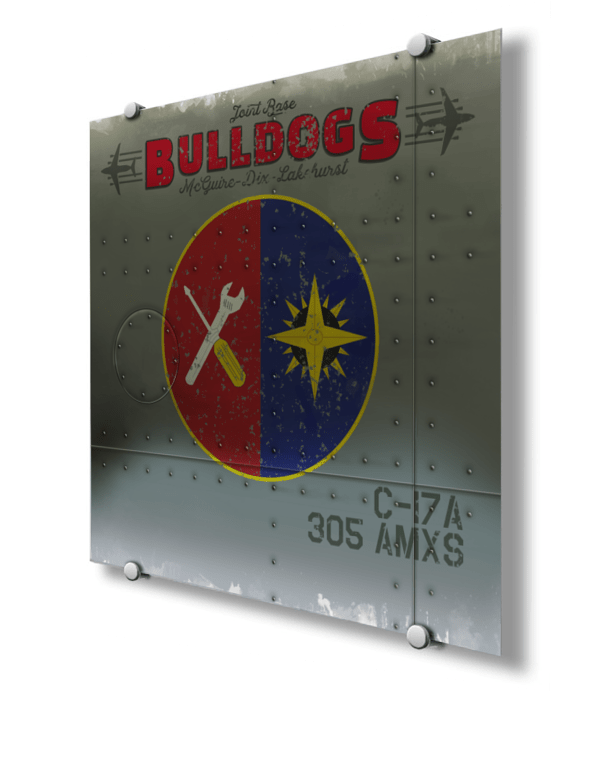

NAS Corpus Christi Coastal Bend
Naval Air Station Corpus Christi, also known as Truax Field is a naval base located six miles southeast of the central business district of Corpus Christi, in Nueces County, Texas.
Massive 40×60 canvas wraps and framed canvas wraps available upon request!


“NAS Corpus Christi Coastal Bend” vintage style military aviation travel poster art by – Squadron Posters!
Training Squadron 27 (VT-27) was initially established on July 11, 1951 as Advanced Training Unit-B at Naval Air Station (NAS) Corpus Christi. The command moved to NAS Kingsville in 1952 and again to NAS New Iberia, Louisiana in 1960 at which the squadron was redesignated VT-27. In July 1964, the ‘Boomers’ returned to NAS Corpus Christi where they continue to be an important member of the community. One of just five Navy Primary training squadrons, VT-27 is one of two located on the Coastal Bend. In 1973, the squadron began a transition to the role of a Primary training squadron with the arrival on 1 August of the first T-28 Trojan. By 1 October 1973, the last Grumman TS-2A Tracker, had departed, signifying the end of the Advanced training role and the completion of the transition to Primary training. In August 1983, the squadron took delivery of the first T-34C Mentor aircraft. Since March 1984, when the last T-28 ever used for naval flight training departed, the T-34C was the mainstay of the Navy and Marine Corps Primary flight training program. Since early 2013, VT-27 began exclusive use of the T-6B for all primary flight training.
VT-31 provides advanced training in the twin engine T-44A and T-44C Pegasus aircraft. The Beechcraft King Air family is part of a line of utility aircraft produced by Beechcraft. The King Air line comprises a number of twin-turboprop models that have been divided into two families; the Model 90 and 100 series developed in the1960s are known as King Airs, while the later T-tail Model 200 and 300 series were originally marketed as Super King Airs, with “Super” being dropped by Beechcraft in 1996 (although it is still often used to differentiate the 200 and 300 series King Airs from their smaller stablemates).T-44A Pegasus Model H90 as a Multi-engine training aircraft for US Navy, based on King Air B90, 61 built.



,e_distort:arc:100/w_3500/if_h_gt_1110/w_2500,h_700/if_end/e_outline:14,co_rgb:130600/fl_layer_apply,e_overlay,g_north,y_120/co_$background,l_text:HanleyPro-Block.otf_150:$(line2)/w_3500//if_h_gt_530/h_530,w_2000/if_end/e_outline:14,co_rgb:130600/fl_layer_apply,e_overlay,g_south,y_410/co_rgb:110500,l_text:HanleyRough-Script.otf_250:$(line3)/fl_layer_apply,g_south,y_120/c_scale,h_2300,l_$patch1/y_-150,e_overlay,fl_layer_apply/c_scale,h_2300,l_$patch1/y_-150,e_contrast:50,o_20,fl_layer_apply/l_leather:leathgrunge3/fl_cutter.layer_apply/u_leather:brownjacket2.jpg/bo_500px_solid_rgb:582811///t_brownpatchfeat///leather/brownjacket2.jpg "Leather Bomber Jacket Style Art")